Pneumatic Products B2B Buyer's Guide
Pneumatic Products B2B Buyer's Guide: Sourcing, Standards & Supplier Selection
Purchasing pneumatic components is not just about picking a model and comparing prices. Cylinders, solenoid valves, FRL units, fittings, and tubing—these components work as an integrated system in actual machinery. One part may look fine on its own, but when assembled together, you might run into air leaks, slow response times, or shortened service life. For B2B buyers, what really matters is a complete evaluation framework that covers everything from product selection and factory auditing to long-term supply partnerships.
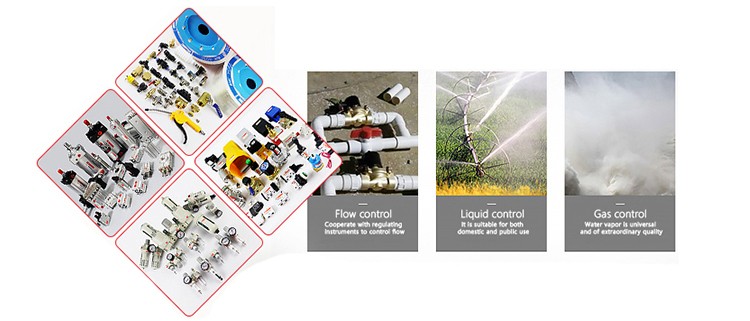
Where Pneumatics Shine—And Where They Always Fall Short
Pneumatics are widely used in industrial automation because they offer advantages that electric or hydraulic solutions often struggle to match: simple construction, fast actuation, relatively low cost, and—most importantly—they perform reliably in harsh environments like flammable, dusty, high-vibration, or wet conditions. In these settings, electric alternatives tend to fall short.
But the drawbacks are equally persistent. The core issue is air compressibility, which makes it difficult to achieve perfectly uniform and stable motion speeds in pneumatic actuators. When precise positioning is required, electric systems have the upper hand. Additionally, pneumatic output force is limited—under normal operating pressure (0.3–1.0 MPa), total output typically stays below 10–40 kN, making it unsuitable for heavy-load applications. Another factor: moisture, oil, and contaminants in compressed air have a significant impact on system lifespan. If air quality isn't properly treated, even the best cylinders won't last.
So the question isn't whether pneumatics are "good" or "bad"—it's whether they're the right fit for your specific application. They excel in high-speed reciprocating motion, simple material handling, rotary swinging, and other scenarios that don't require ultra-high precision. They are not suitable for heavy loads, high-precision positioning, or complex continuous trajectory control.
Is There a Clear Standard That Separates Quality Products from Inferior Ones?
Strictly speaking, there are both national and industry standards for pneumatic products—but these serve more as a baseline for compliance rather than a definitive measure of quality.
For example, JB/T 5967-2007 specifies quality grades for compressed air used in pneumatic systems, while SY/T 5027-2012 defines technical requirements and test methods for pneumatic components in petroleum drilling equipment. There's also JB/T 8884-1999 covering model designation methods. These standards ensure that compliant products meet basic safety, interface, and performance requirements—but passing these standards doesn't automatically mean "high quality."
The real distinction between A-grade, B-grade, and C-grade products often comes from industry association standards or corporate-level standards established by leading manufacturers. For instance, the 2025 release of T/CCILLA 002-2025 (Quality Grade Evaluation for Pneumatic Ball Valves) introduced a three-tier evaluation system covering 10 metrics including surface quality, machining precision, and sealing performance—giving buyers a clear basis for the "you get what you pay for" principle. In the oil and gas sector, similar grading standards like SY 5283-1991 have been in place for years.
Bottom line: If your only requirement is "it works," meeting national or industry standards is sufficient. If you need "durable, stable, and low failure rate," you'll want to check whether the supplier follows higher-tier corporate or association standards. More importantly, look for complete factory test reports and evidence of process control (e.g., Cpk ≥ 1.33 on critical dimensions)—that's where the real differences emerge.
Supplier Evaluation: What Sets a Reliable Pneumatic Manufacturer Apart?
Evaluating a supplier goes far beyond browsing their website and comparing price quotes. A trustworthy manufacturer typically stands out in five key areas:
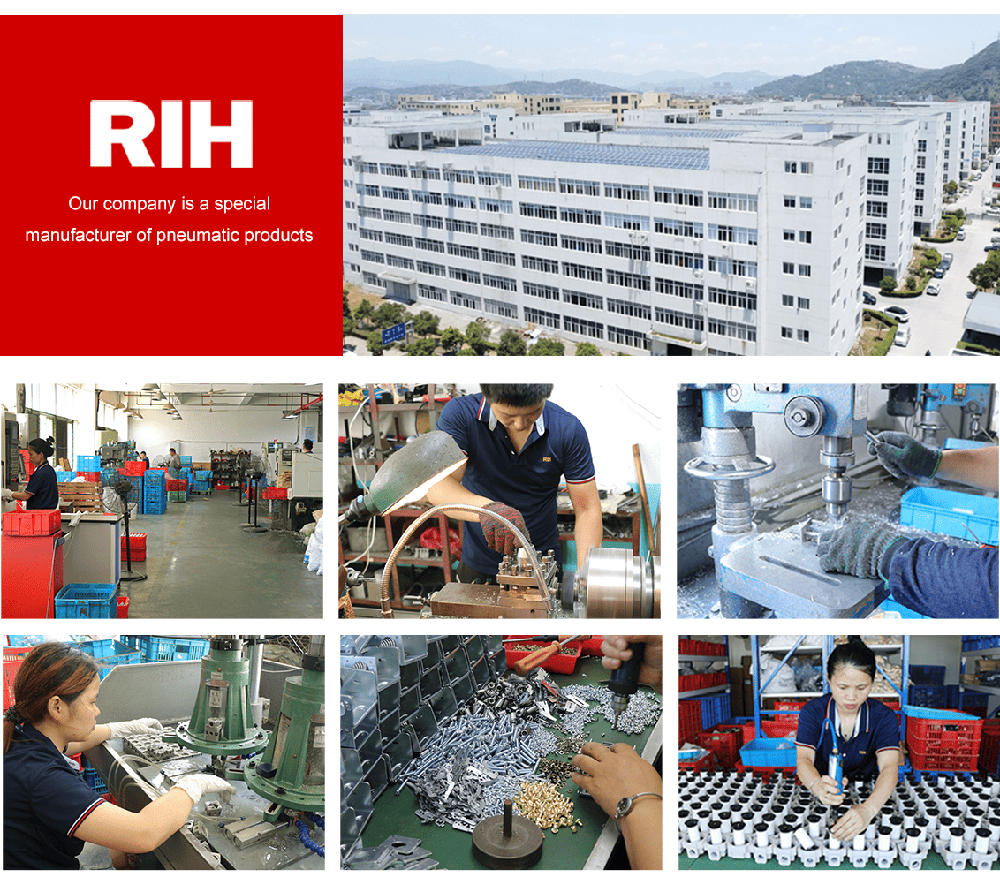
1. Manufacturing Capability & Capacity Alignment. Reliable manufacturers are willing to show you their factory floor—not just a glossy brochure. Look at whether production runs on manual workstations or CNC + automated assembly lines. Check actual monthly output to see if they can scale to your order volume. Small shops producing fewer than 2,000 units per month are likely to struggle when you place large batch orders.
2. Closed-Loop Quality Control. A complete QC system should include incoming material inspection (material certifications), in-process control (SPC data), and final testing (pressure tests, leak tests, stroke verification)—with test records retained for at least 3 years for traceability. Factories where the "quality inspector" just checks dimensions with a caliper won't deliver batch-to-batch consistency.
3. System Compatibility Across Product Lines. If cylinders, FRL units, valves, and fittings come from different suppliers, you're setting yourself up for finger-pointing when problems arise. A manufacturer that can supply all these categories and offer matched selection recommendations usually has stronger technical expertise.
4. Direct Factory Access vs. Trader Intermediaries. Traders can handle spot purchases, but for long-term repeat orders, you need consistent batch quality and responsive after-sales technical support—only the manufacturer can directly control these.
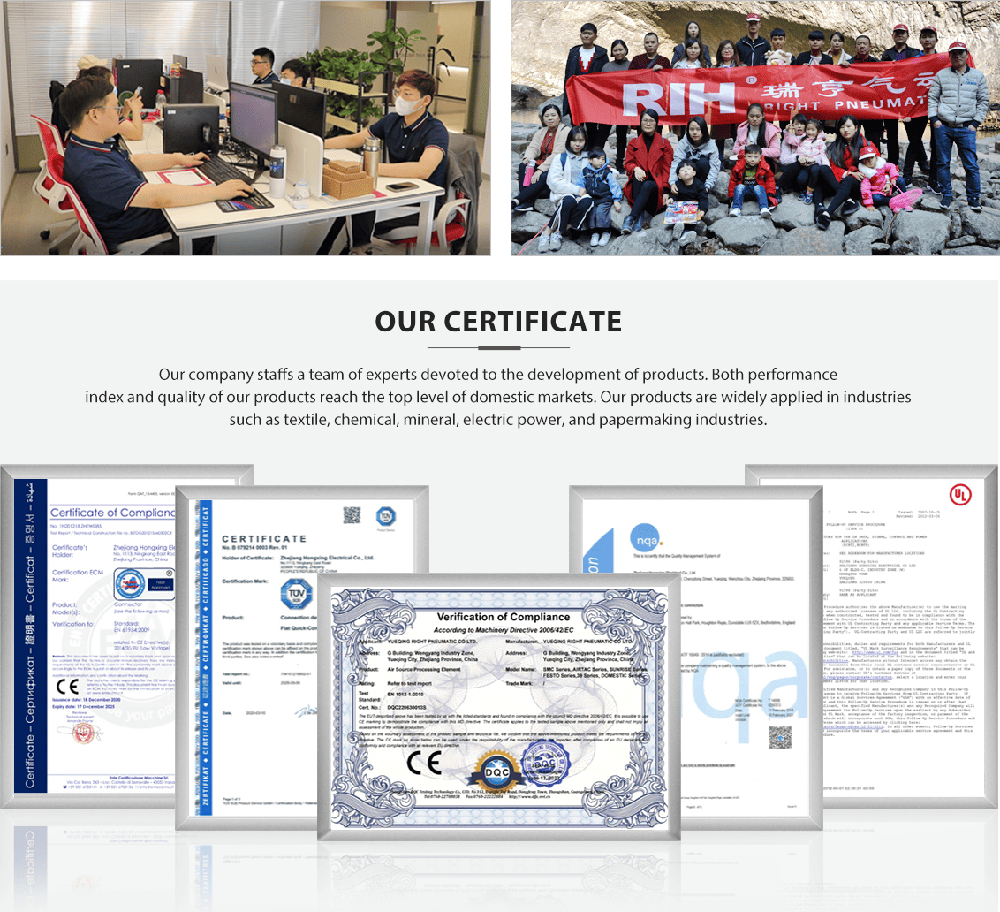
5. Verified Certifications & Compliance Records. ISO 9001 is the baseline. For exports to the EU, CE certification is required. For food and pharmaceutical applications, FDA or other industry-specific approvals may be necessary. Suppliers that proactively provide these certifications and are open to factory audits are typically the legitimate players.
What a reliable manufacturer should provide: clear product catalogs with detailed specifications, sample testing support, complete factory test reports for each batch, a clear plan for batch-to-batch consistency on volume orders, and—most importantly—direct access to production or engineering personnel when you have technical questions, rather than a receptionist who just relays messages.
At the end of the day, purchasing pneumatic components isn't really about buying parts—it's about choosing a partner who can help you avoid the nightmare of "the machine is assembled but it just won't run smoothly." Price is negotiable, but quality, delivery reliability, and technical support are thresholds you shouldn't lower.
About Ruiheng Right Pneumatic
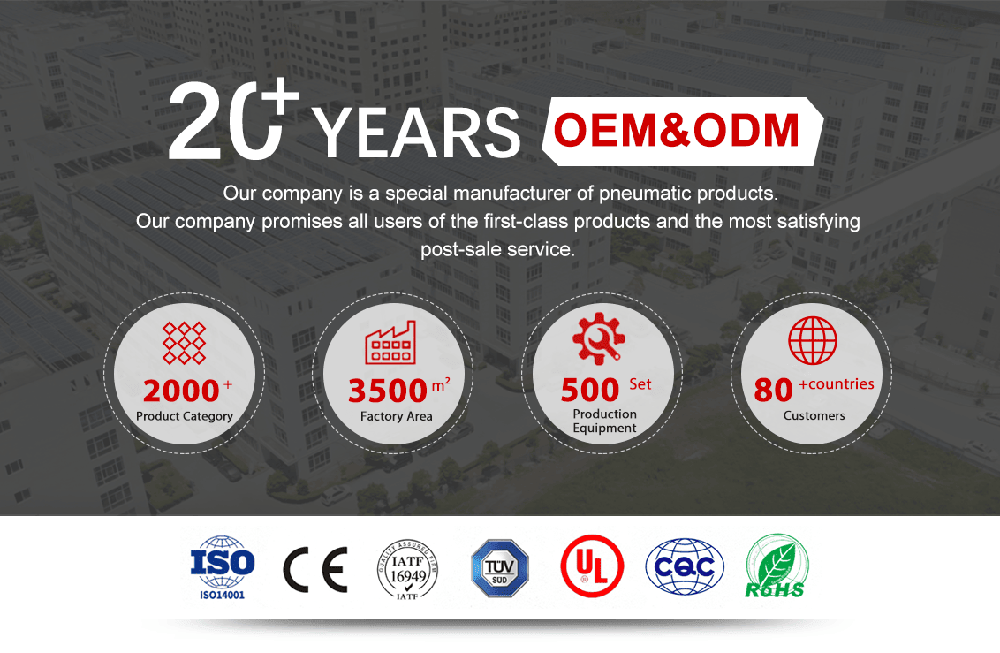
RIH is a manufacturer with over 20 years of experience in producing pneumatic and fitting products, as well as solenoid valves, pipe fittings in various materials, valves, tubes, and more. We hold CE certification and invention patents, and we also support custom color and size options. Please feel free to contact us for more information, product catalogs, or to place an order – you can download these materials directly from our website or send us an email.amy@cnrih.com OR rita@rihpneumatic.com